

Car leasing often feels like a closed door for anyone without a spotless credit history or the appetite for a lengthy commitment. That perception is outdated. Personal leasing flexibility has transformed the UK vehicle market, offering short-term contracts, adjustable mileage, and accessible terms for individuals and small businesses with limited or adverse credit. This guide explains what personal leasing flexibility truly means, how it works in practice, and how you can use it to secure the vehicle you need without the traditional barriers or long-term obligations that once defined the industry.
Table of Contents
- Understanding personal leasing flexibility
- Key features of flexible personal leasing
- Benefits of personal leasing flexibility for credit-challenged individuals
- Flexible leasing for UK small business owners
- How to choose the right flexible lease
- Discover your flexible leasing options with Flexi Auto Lease
- Frequently asked questions
Key Takeaways
| Point | Details |
|---|---|
| Flexible lease definition | You can customise your contract’s length, mileage, and vehicle options for greater convenience. |
| Works for limited credit | Flexible personal leasing can be accessed with bad or limited credit and often avoids hard credit checks. |
| Ideal for business needs | Small businesses can adjust fleet size and terms easily, supporting financial agility and growth. |
| Minimise risk | Options to end, return, or swap vehicles reduce long-term financial risk. |
| Steps to choose wisely | Review contract terms, flexibility levels, and provider policies before signing any agreement. |
Understanding personal leasing flexibility
Flexible personal leasing allows you to select contract length, mileage allowances, and renewal or return periods that suit your circumstances. It challenges the outdated belief that all leases demand pristine credit scores or multi-year commitments. This approach is particularly relevant for individuals and small businesses with non-standard credit profiles, including those who are self-employed, recently employed, or rebuilding their financial standing.
Flexibility extends beyond contract duration. Many agreements now permit vehicle swapping, early returns, and mid-term adjustments to mileage or payment schedules. Flexible lease terms do not always require extensive credit checks, making these options accessible to a broader audience. The shift reflects a market responding to real-world needs rather than rigid financial models.
Key aspects of flexible personal leasing include:
- Contract lengths from one month to 24 months, with options to extend or end early
- Adjustable mileage limits that can be increased or decreased during the lease period
- Vehicle swap or upgrade options without penalties in many agreements
- Reduced upfront payments compared to traditional finance or purchase routes
- Soft or no credit checks for many providers, minimising impact on your credit file
"The leasing landscape has evolved significantly. Providers now recognise that credit history doesn't define reliability, and flexible terms reflect that understanding. Customers gain access to vehicles they need without the financial stress of traditional approval processes."
This evolution means you can secure a vehicle that fits your budget and lifestyle without committing to terms that no longer work for you. Whether you need a car for six months whilst transitioning between jobs or a van for a seasonal business project, flexible lease terms provide the control and adaptability that traditional contracts lack. Understanding the difference between leasing versus buying helps clarify why flexibility matters for your financial planning.
Key features of flexible personal leasing
Flexible leasing products share several defining characteristics that set them apart from conventional contracts. Short-term agreements start from as little as one month, allowing you to lease a vehicle for precisely the period you need. Mileage flexibility means you can adjust your allowance if your driving patterns change, avoiding punitive excess mileage charges. Lower upfront payments reduce the initial financial burden, making leasing accessible even if you cannot afford a large deposit.
The application process for those with bad or limited credit is straightforward. Most flexible lease providers use soft credit checks or alternative affordability assessments, focusing on your current income and circumstances rather than past financial difficulties. This approach opens doors for individuals who would be declined by traditional lenders.
Common flexible lease types and their suitability:
- Short-term personal lease: Ideal for temporary needs, job transitions, or testing a vehicle type before committing long-term. Suitable for those with limited credit or uncertain future plans.
- Rolling monthly contract: Offers maximum flexibility with month-to-month renewals. Best for self-employed individuals or those with fluctuating income.
- Adjustable mileage lease: Allows mid-contract mileage changes. Perfect for drivers whose usage patterns vary seasonally or due to work demands.
- Swap-and-upgrade lease: Permits vehicle changes during the contract. Suits growing families or businesses with evolving transport needs.
- No-deposit lease: Eliminates upfront costs entirely. Designed for those with limited savings or cash flow constraints.
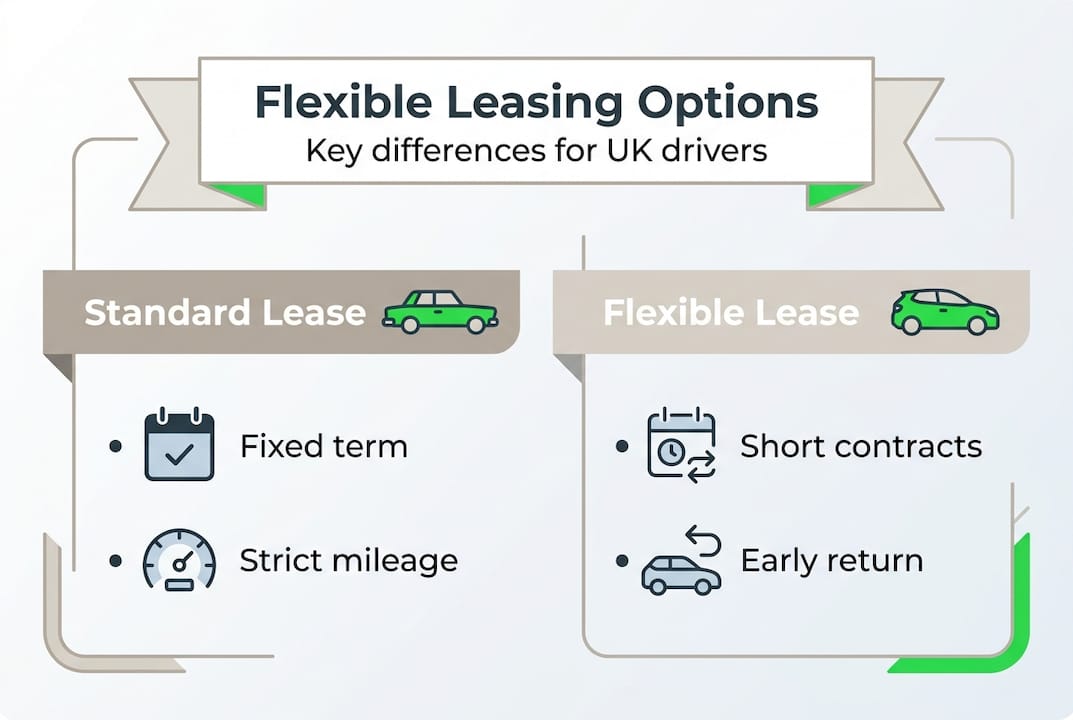
The table below compares standard and flexible leasing features:
| Feature | Standard Lease | Flexible Lease |
|---|---|---|
| Minimum contract length | 24-48 months | 1-6 months |
| Credit check type | Hard check required | Soft or no check |
| Mileage adjustment | Fixed at signing | Adjustable mid-contract |
| Early termination | Penalties apply | Often penalty-free |
| Upfront payment | 3-6 months advance | 0-1 month advance |
| Vehicle swap option | Not available | Available in many contracts |
Pro Tip: Prioritise leases that allow early returns or swap-outs to minimise financial risk. This feature protects you if your circumstances change unexpectedly, such as job loss, relocation, or family expansion.
Flexible lease options can benefit those with limited credit, providing access to reliable vehicles without the barriers imposed by traditional finance. Reviewing a lease checklist criteria before signing ensures you understand all terms and select the best option for your needs. For further context on how leasing works, consult car leasing explained resources.
Benefits of personal leasing flexibility for credit-challenged individuals
Flexible leasing removes traditional loan barriers, allowing customers with bad credit to access vehicles without the rejection and frustration of conventional finance applications. This accessibility is transforming how people with limited credit histories secure reliable transport for work, family, and daily life.
Recent data shows that flexible leasing options are increasingly adopted by credit-limited customers in the UK, with adoption rates rising as awareness grows. This trend reflects both the availability of flexible products and the genuine need among consumers who have been underserved by traditional lenders.
Key benefits include:
- Reduced commitment anxiety: Short contracts mean you are not locked into years of payments if your circumstances change
- Credit preservation: Soft checks and alternative assessments avoid damaging your credit file further
- Immediate access: Quick approval processes enable you to drive within days, not weeks
- Transparent costs: All-inclusive pricing covers road tax, maintenance, and breakdown cover, eliminating unexpected expenses
- Flexibility to upgrade: As your financial situation improves, you can move to a better vehicle without penalties
Flexible leasing can also support credit improvement when structured responsibly. Making regular, on-time payments demonstrates financial reliability, and some providers report positive payment histories to credit agencies. This creates an opportunity to rebuild your credit standing whilst meeting your transport needs.
Pro Tip: Always check the minimum contract period and early termination terms before signing. Even flexible leases may have notice periods or minimum commitment clauses that could affect your ability to exit the agreement without cost.
For those interested in environmentally friendly options, EV leasing with limited credit is increasingly accessible, combining flexibility with lower running costs. Understanding motor finance regulations helps you recognise your rights and protections as a consumer.
Flexible leasing for UK small business owners
Small business owners face unique challenges when managing vehicle needs. Cash flow fluctuates, business demands change, and long-term commitments can become liabilities rather than assets. Flexible leasing addresses these concerns by offering fleet solutions that adapt to your business reality.

Fleet flexibility helps preserve working capital. Instead of tying up funds in vehicle purchases or lengthy hire agreements, you can allocate resources to growth, stock, or operational expenses. This financial breathing room is crucial for startups and businesses navigating uncertain markets.
Small businesses are turning to flexible leasing to manage unpredictable vehicle needs, recognising that traditional contract hire lacks the agility required in dynamic industries. Whether you need to scale up for a busy season or reduce fleet size during quieter periods, flexible terms provide the control you need.
The comparison below highlights differences between flexible fleet leasing and traditional contract hire:
| Aspect | Traditional Contract Hire | Flexible Fleet Leasing |
|---|---|---|
| Contract duration | 36-60 months fixed | 6-24 months, adjustable |
| Fleet size changes | Requires new contracts | Add or remove vehicles easily |
| Vehicle mix | Fixed at signing | Swap vehicle types mid-contract |
| Credit requirements | Strict business credit checks | Relaxed criteria, alternative assessments |
| Early termination | High penalties | Often penalty-free or minimal fees |
| Cash flow impact | Large upfront costs | Low or zero deposit options |
Types of flexibility small businesses should prioritise:
- Vehicle mix adjustability: Ability to swap between vans, cars, or specialist vehicles as projects change
- Scalable fleet size: Add vehicles during peak periods and return them when demand drops
- Short notice periods: Exit or modify agreements with minimal advance notice
- Inclusive maintenance: All-in pricing that covers servicing, tyres, and repairs to simplify budgeting
- Mileage flexibility: Adjust allowances to match actual business usage without penalties
These features help you avoid long-term liabilities whilst maintaining the fleet capacity your business requires. You can respond to opportunities quickly, whether that means taking on a new contract that requires additional vehicles or downsizing during slower periods without financial penalties.
For practical guidance, review business car leasing tips tailored to small enterprises. Understanding company car benefits also helps you maximise tax efficiency and employee satisfaction.
How to choose the right flexible lease
Selecting the best flexible lease requires careful evaluation of terms, costs, and provider reputation. Follow these steps to make an informed decision:
- Determine your actual needs: Calculate realistic mileage, contract length, and vehicle type requirements based on your circumstances, not aspirations.
- Compare contract lengths: Assess whether a rolling monthly, six-month, or 12-month agreement best suits your situation and future plans.
- Review early exit terms: Understand notice periods, termination fees, and conditions for ending the lease before the minimum term expires.
- Examine renewal options: Check whether you can extend, upgrade, or swap vehicles at the end of the initial period without penalties.
- Calculate total costs: Add up monthly payments, upfront fees, mileage charges, and any additional costs to determine the true expense.
- Verify included services: Confirm what is covered in the monthly payment, such as road tax, maintenance, breakdown cover, and insurance.
- Check credit impact: Ask how the application and agreement affect your credit file, requesting examples of their credit check process.
- Read customer reviews: Research provider reputation, focusing on experiences with contract flexibility, customer service, and dispute resolution.
- Request documentation: Obtain written terms before committing, ensuring you understand all clauses and obligations.
- Negotiate terms: Many providers offer flexibility on deposits, mileage, or contract length if you ask.
Assessing contract length, total cost, and return policies is crucial for flexibility. These factors determine whether the lease truly meets your needs or creates new financial pressures.
Pro Tip: Ask how flexible contracts affect your credit report and request examples of how previous customers have modified or exited agreements. This transparency reveals whether the provider genuinely supports flexibility or uses it as a marketing term.
Red flags to avoid:
- Hidden fees for administration, processing, or early termination not disclosed upfront
- Non-transparent mileage limits with excessive per-mile charges for overages
- Harsh damage charges that go beyond fair wear and tear
- Pressure to sign immediately without time to review terms
- Providers unwilling to explain credit check processes or contract clauses
Understanding types of flexible leases helps you identify which product aligns with your needs. For additional consumer protection information, consult guidance on leasing from trusted sources.
Discover your flexible leasing options with Flexi Auto Lease
If you are ready to explore flexible leasing that truly adapts to your circumstances, we are here to help. Flexi Auto Lease offers a range of flexible car and van leasing options tailored to both personal and business customers throughout the UK. We specialise in supporting those with limited or poor credit, using soft checks and alternative affordability assessments rather than rigid credit scoring.

Our easy online application process and custom lease structuring mean you can secure a vehicle that fits your budget, timeline, and lifestyle without the barriers imposed by traditional lenders. Whether you need a car for a few months whilst between jobs, a van for a seasonal business project, or a long-term fleet solution that scales with your enterprise, we provide the flexibility and support you need. Learn more or start your flexible leasing journey today at Flexi Auto Lease solutions.
Frequently asked questions
Can I get a flexible car lease with bad credit in the UK?
Yes, many providers offer flexible leasing options for those with limited credit, using soft checks and alternative assessments. These agreements focus on your current affordability rather than past financial difficulties.
What counts as a 'flexible' lease contract?
A flexible lease contract typically allows you to return, upgrade, or swap vehicles with short notice. It also features adjustable mileage, variable contract lengths, and lower upfront costs compared to traditional agreements.
Will a flexible personal lease affect my credit score?
It depends on the provider, but many flexible lease options use soft checks that have minimal or no impact on your credit score. Always confirm the credit check type before applying.
Are flexible lease options available for business fleets?
Yes, flexible fleet leasing is designed for small businesses needing to match fleet size, vehicle types, and contract terms to changing business demands. These agreements support cash flow management and operational agility.
How quickly can I get a vehicle with a flexible lease?
Most flexible lease providers offer quick approval processes, enabling you to drive within days of application. The exact timeline depends on vehicle availability and documentation completion, but the process is significantly faster than traditional finance routes.